Artwork comparison
Useful for wrong label versions or absent regions on stable packaging. It needs approved reference images for each SKU.
Turn the approved food label into checks that a production line can actually perform: packaging version, visible English information, date, batch and code-to-job agreement. addaScan scopes the cameras, reference data and reject handling from Johannesburg. A camera can compare what is printed; it does not establish the truth of ingredients, shelf life or a nutrition claim.
Updated 2 November 2026 · Author: Frank Guo
Consider a food pack with the correct artwork and a clear date, but a lot number left over from the previous run. A print-presence check would pass it. The line instead needs an approved packaging reference, the current manufacturing record and a rule for matching the variable fields. The FDA Ghana General Labelling Requirements for Pre-packaged Food, form FDA/FER/RQT–04 version 01, effective date printed as 02/01/20, lists the fields used as the starting point below. It was retrieved from the FDA website on 2 November 2026; product-specific exceptions and approved label details must still be confirmed for the actual product.
Source version and scope are stated below. A line inspection checks selected evidence; the manufacturer retains responsibility for the applicable product specification.
| Task | Reference and camera view | Exception and boundary |
|---|---|---|
| Product identity and English information — FDA form, main list | The form lists brand/generic name, quantity, ingredients, origin and manufacturer/agent details, and says labelling shall be in English. Compare the approved artwork version and the visible required regions. | A matching label image cannot substantiate composition, origin, nutrition or the manufacturer’s registration. The product owner supplies the approved content. |
| Manufacture date, best-before/use-by and lot — FDA form, main list | The form lists manufacture date, best-before or use-by where applicable, and batch/lot. Read the relevant fields and compare them with the authorised production record. | Do not calculate shelf life from appearance. A readable but incorrect batch is a mismatch; an unreadable date is unresolved. |
| Legibility and durability — FDA form, main list | Check missing print, occlusion, smear and contrast against representative good and defective samples under the intended lighting. | An optical view can assess visible print now; it cannot by itself prove indelibility through distribution or storage. |
| Primary and secondary packaging — FDA form, note | Where both packaging levels exist, the form says both must conform to FDA food-labelling requirements. Define the fields and views needed at each level. | A correct outer case does not prove every inner pack is correct. Track the relationship and define exceptions at each station. |
Related solutions: Label & print inspection · OCR/OCV & code inspection
The camera image of a printed date, then the model output for an accepted and a defective print. Legibility is judged on images like these, against agreed good and bad samples.
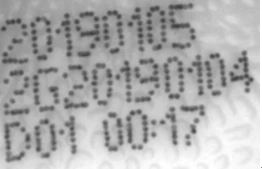

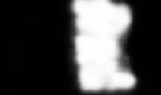
Original images from the milk-packaging application in addaScan’s guide; not a Ghanaian product or an addaScan installation. Smeared date printing on milk packaging
Approve the artwork and variable data before starting the job.
Keep wrong data, missing print and insufficient visibility separate.
Track the affected pack to rejection; on reference loss or restart, hold suspect output and reconcile it before release.
FDA requirements define information obligations; the inspection specification defines observable pass, fail and unresolved states. Formal label approval, laboratory evidence and legal interpretation remain separate from the optical inspection scope.
The following comparison uses the FDA form linked here. It is an engineering inspection guide, not a replacement for product-specific label approval.
Provide the approved label files, product categories, examples of primary and secondary packaging, authorised date and batch rules, defect samples, speed and available reject position. Identify who releases the artwork and who maintains the production reference.
Photos, drawings and samples are arranged after initial contact.
Request a Vision Assessment →Compare the relevant method and its limits in these application guides.
Describe the product, the required decision and the factory country. We will use those details to scope the next assessment.