OCR/OCV smart camera
For date and batch text against the active job; test each printer, ink and substrate.
Pre-packaged food made in Nigeria must be registered with NAFDAC before it is sold, and the registration dossier includes the product labels and coloured artworks. That registered artwork is the reference a packing-line camera should check against. addaScan, a Johannesburg-based machine vision integrator, designs stations that compare each printed pack, date and batch code with the released artwork and production record, and hold or reject mismatches. A law-firm summary of the labelling requirements lists the fields a line can check: date of manufacture and best before in DD/MM/YYYY, batch number, the NAFDAC registration number and a barcode. Confirm them with your regulatory affairs adviser.
Updated 2 November 2026 · Author: Frank Guo
A carton runs with a clear date and a readable batch code, but its artwork is the superseded version used before a label change. A print-presence check passes it. NAFDAC’s guideline for registering pre-packaged food made in Nigeria (FR&RA-GDL-002-01, effective 1 March 2026) lists product labels and coloured artworks among the registration documents and requires labelling to conform to the Pre-packaged Food (Labelling) Regulations 2022. In August 2023 NAFDAC’s Director-General announced that the 2022 regulation replaced the 2005 version. The line therefore needs the released artwork version, the active job and agreed rules for the variable fields.
Fields as summarised by Firmus Advisory (November 2024). The right-hand column is what a camera or reader can verify on each pack once your regulatory team releases the exact content.
| Field | As summarised | Check on the line |
|---|---|---|
| Date of manufacture | Written clearly in DD/MM/YYYY and introduced by the words “Date of Manufacture”. | OCR the date, check the format and compare it with the production date rule for the job. |
| Best before date | DD/MM/YYYY; on multi-item packs, on the outer pack and on the individual items the customer keeps. Exemptions are listed for some products. | OCR on each level of packaging that must carry it; compare with the shelf-life rule. |
| Batch number | Specified on the label; no format is given in the summary. | Read the batch code and compare it with the active production record. |
| NAFDAC registration number | As issued on the certificate; placeholder labels must be updated before release. | Compare the printed NAFDAC number with the registered artwork for the product in production. |
| Barcode | Included with traceable information. | Decode the barcode and compare it with the product and pack size in production. |
| Product name, net content, manufacturer | Name on the principal display panel; net content by volume, weight or count; name and address of the manufacturer or packer. | Artwork comparison against the released version, especially after a label change. |
Secondary summary, not the Regulations themselves. Ingredients, allergens, storage and language are label-content decisions for the product owner; a camera checks that the released content is printed and legible.
Source version and scope are stated below. A line inspection checks selected evidence; the manufacturer retains responsibility for the applicable product specification.
| Task | Reference and camera view | Exception and boundary |
|---|---|---|
| Artwork version — registration documents (guideline 4.7) | Use the released label or carton artwork that matches the registered product as the master. Compare distinguishing regions such as product name, variant, pack-size panel and layout features at the proposed camera position. | A matching image does not prove that the artwork complies with the 2022 Regulations or that the registration is current; the product owner controls both. |
| Labelling conformity — guideline 3.1 | Turn the label fields your regulatory team requires into a list of regions the camera can see on each pack format, including the NAFDAC registration number where it appears on your approved label. | The camera checks presence, legibility and agreement with the approved content of the listed regions. It does not decide which fields the law requires. |
| Date and batch codes | Read printed dates and batch or lot codes and compare them with the active production record and the date rule your quality team approves. | A readable but wrong batch is a mismatch; an unreadable or hidden code is unresolved. Neither may be converted into a pass. |
| Sachets, films and outer cases | Plan views for creased sachets, reflective film and printed cartons separately; the outer case may carry a different set of codes. | Leak tightness, fill weight and product quality need their own tests. |
Related solutions: Label & print inspection · OCR/OCV & code inspection
Two separate questions: is this the released artwork for the product, and is the printed date and batch complete and correct?
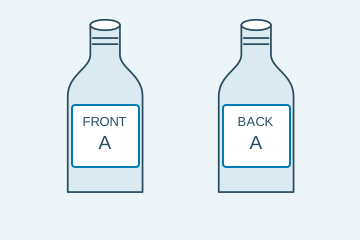
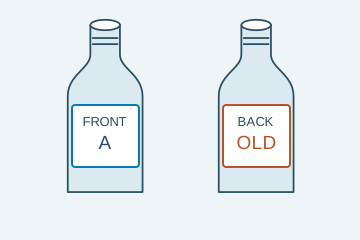
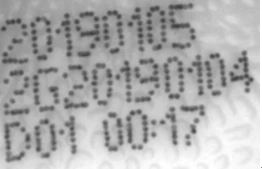
Wine-label schematics and a milk-package code crop from addaScan application guides; they illustrate the checks and are not NAFDAC-registered products. Front and back label verification · Smeared date printing on milk packaging
Load the approved label master and the date and batch rule with the job.
Associate the label, date and batch results with one physical pack.
Remove mismatches and unresolved packs, and record the job and image evidence.
NAFDAC registration, label approval and legal interpretation stay with the product owner and its regulatory advisers. The inspection specification defines observable pass, fail and unresolved states for the fields they release.
The comparison below uses two NAFDAC documents and, for the field list, a law-firm summary. The gazetted text of the 2022 Regulations was not available on the NAFDAC website when this page was written; the field list is therefore secondary and must be confirmed against the Regulations and your registration certificate. Older NAFDAC guidance written for the 2005 regulations is not used.
Approved label files and the registered product list, pack formats, sachet and carton samples including creased, smudged and wrong-version examples, the date and batch rules, line speed and the available reject position. Name who releases artwork after a label change.
Photos, drawings and samples are arranged after initial contact.
Request a Vision Assessment →Compare the relevant method and its limits in these application guides.
Describe the product, the required decision and the factory country. We will use those details to scope the next assessment.