Fixed reader
Choose it when the decision is to read a code and compare a defined identifier. It does not inspect cap position or label artwork.
addaScan is a Johannesburg-based machine vision integrator that designs vision inspection stations and supplies industrial code readers for factories in Kenya; where site work is agreed, its engineers travel from Johannesburg, and quotes are in US dollars. Plan vision inspection for labels, date codes, closures and pack contents on your production line in Kenya. A reader that decodes a label and a station that verifies the correct product are different purchases.
Updated 2 November 2026 · Technical contact: Frank Guo
After a flavour change, a bottle carries a well-applied label and a clear date. Both checks can pass while the label belongs to the previous product. Start with the active job: which artwork, cap, printed fields and case contents are expected? The inspection reference must change with that job, and each result must remain tied to the same bottle or packing event.
Have samples, photos or a line drawing? Start the assessment now, or send them on WhatsApp.
Request a Vision AssessmentWhatsApp +27 68 925 2696Define the evidence and the failure response before selecting a camera, then test each choice on your own products and line conditions.
| Task | Reference and camera view | Exception and boundary |
|---|---|---|
| Label version on each bottle | Compare each bottle label with the current SKU: a well-applied label from the previous flavour is a mismatch, not a pass. Plan the view for bottle rotation and glare. | Missing, wrong and unreadable labels are separate results, and each follows the bottle to a confirmed reject. |
| Printed date and batch | Read the date and batch on each pack and compare them with the job’s date rule and batch, not only whether ink is present. | An unclear read goes to the agreed exception route; the printer’s “printed” signal is not a substitute. |
| Caps, lids and closures | Check that a cap is present and seated, or that a yoghurt lid is in place and aligned, on every container variant. | A visible closure fault is not a leak test; leak tightness needs its own check. |
| Carton contents at case packing | Check the visible pack positions and the product in the case before it is sealed: a full carton can still hold the wrong flavour. | Stop or reject an incomplete or mixed case and keep the job and inspection record with it. |
Related solutions: Label and print inspection · Bottled water lines · Yoghurt cups · Industrial barcode readers in Kenya
The expected bottle and three faults that a single “pass” signal would hide. Each needs its own result and its own reject.
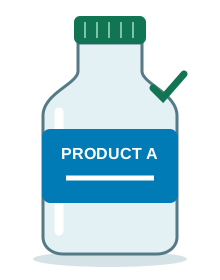
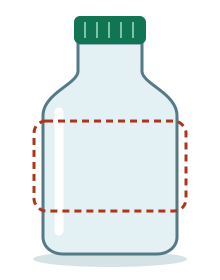
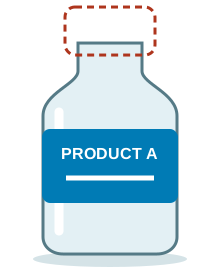
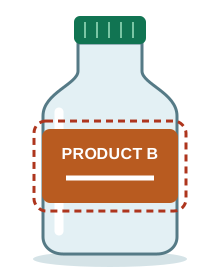
Explanatory schematics from addaScan’s beverage application guide, not photographs of an installation in Kenya. Beverage label, cap and product-mix guide
Tea or coffee packaging can be assessed as tins, pouches, cartons or presentation packs. The inspection question is packaging identity and completeness; this page does not describe raw-leaf or bean quality grading.
Confirm artwork, date rule and pack format before releasing the new recipe.
Associate the camera views and packing result with one bottle or case event.
Clear suspect product, confirm the reference and test the reject before returning to production.
| Scope decision | Information and owner to confirm |
|---|---|
| Recipe ownership | Name who approves packaging versions and supplies the active SKU/date rule. Include a wrong but readable product from the previous job in the acceptance set. |
| Bottle and case interfaces | Mark the camera, trigger and last practical reject on the line drawing. Identify which controller owns each event when bottling and case packing run at different rates. |
Reader supply, a configured reading point and an integrated station are quoted as different scopes. Freight, import and customs responsibilities, engineering travel, installation, training and support are itemised in USD. How a cross-border quotation is structured
Product standards and certification marks in Kenya sit with the bodies below.
National standards body; product certification and standardization marks.
A camera station can check that a required mark or printed field is present and legible on each pack; whether your product needs it is confirmed with the authority or your certification adviser.
Site work is quoted to the factory’s actual location, for example in Nairobi, Athi River, Thika or Mombasa.
Comparing industrial automation companies in Kenya? addaScan’s part is the inspection: it designs vision inspection stations and supplies industrial code readers, and connects them to the PLC, conveyor and reject device that your plant’s automation team, machine builder or local integrator maintains.
Prepare examples of each packaging version, correct and wrong combinations, date rules, container sizes and line spacing. Include the available camera positions, PLC interface and the last practical point for rejection.
Photos, drawings and samples are arranged after initial contact.
Request a Vision Assessment →Compare the relevant method and its limits in these application guides.
Describe the product, the required decision and the factory country. We will use those details to scope the next assessment.